Case study · La Guilde · 2013-2021
Portail Solidaire — the grant life cycle, digitised and run for eight years.
The Portail Solidaire is La Guilde's platform for managing calls for proposals: a fully digital project lifecycle, from application to review, funding and monitoring. I designed it, then ran the scheme: 5 funders, 600 projects sourced and 250 funded each year.
 Logo: Portail Solidaire, La Guilde
- Client
- La Guilde
- My role
- Director of Digital Strategy
- Period
- 2013-2021
- Funders
- 5 on a single platform
The challenge
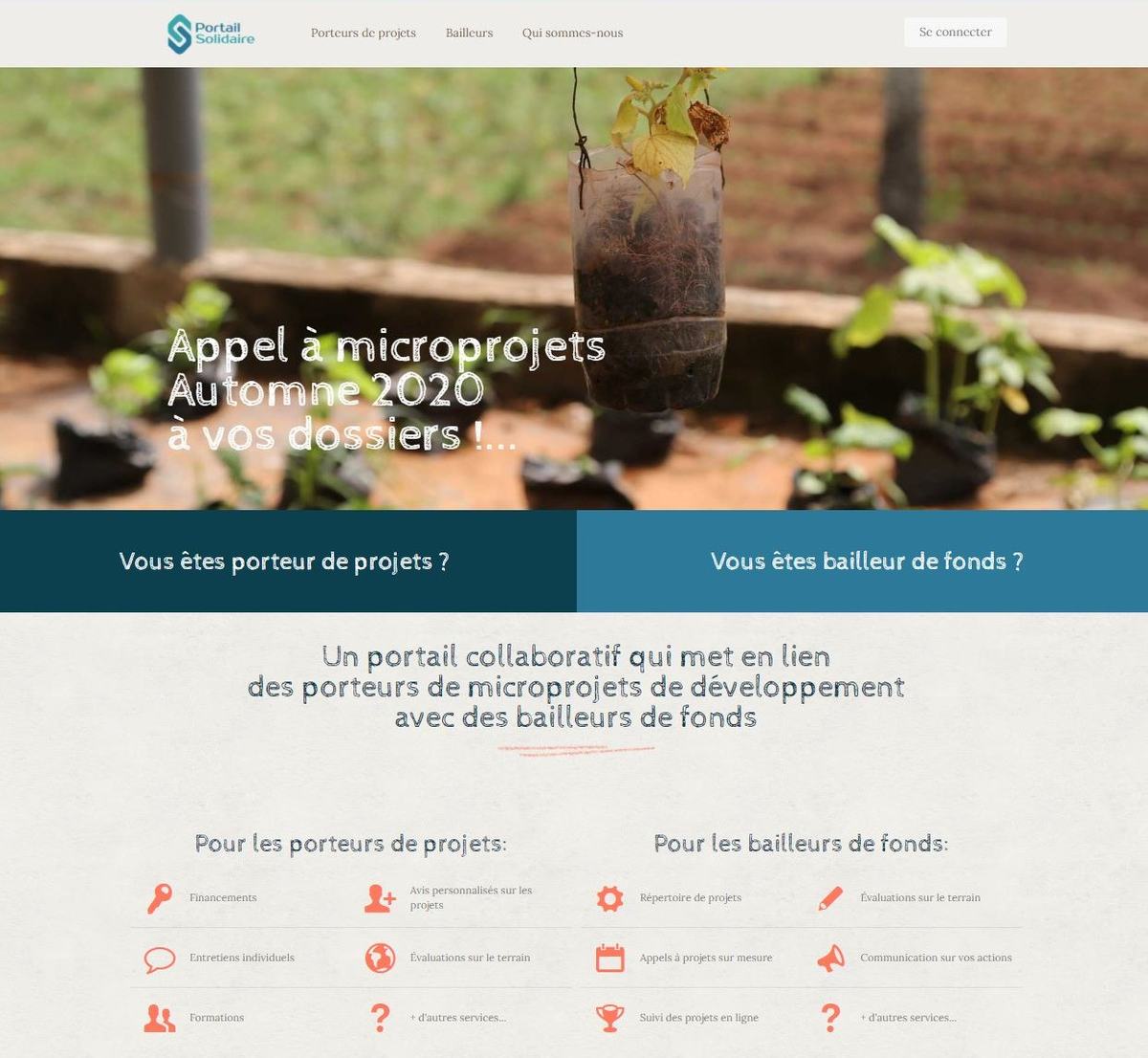
Digitising the life cycle of international solidarity projects and organising cooperation between NGOs, juries and funders, on a single platform.
- 600projects sourced each year
- 250projects funded each year
- 5funders
- 140international experts
- 6people in the team
The scheme, as I specified it
Seven steps, six roles, one application moving through them all.
I wrote the platform's functional specifications (2017): every form, every field, every validation rule and every role, then followed their development and acceptance testing with the contractor. Each project is linked to its Sustainable Development Goals (SDGs); projects can be filtered by SDG, theme, country or amount, combining the filters.
- 6roles, from the NGO to the funder
- 10forms
- 300+fields specified
Open the session
AdministratorSubmission, review, funders' opinion and payment periods; funders attached to the session.
Submit
NGOThe NGO's profile, the project entered in several steps, the forecast budget of expenses and resources.
Review
Internal jury and external expertEligibility criteria, strengths, points of attention, recommendations, opinion.
Decide
FundersEach funder's no-objection opinion, grant awarded.
Pay
Scheme teamTwo thirds at the start, the last third once the final report is approved.
Report
NGOInterim and final reports: planned and actual objectives and beneficiaries, gaps explained.
Evaluate
Reviewer in the fieldFive criteria scored from 1 to 5, those of the OECD DAC: relevance, effectiveness, efficiency, impact, sustainability.
Data follow the application from one step to the next: entered once, carried over automatically (budget, grant, report dates), through to the final evaluation.
How I ran it
Seven steps, from the data matrix to the field.
Design the logical framework and the platform
The data matrix, from application to evaluation, then a fully digital project life cycle.
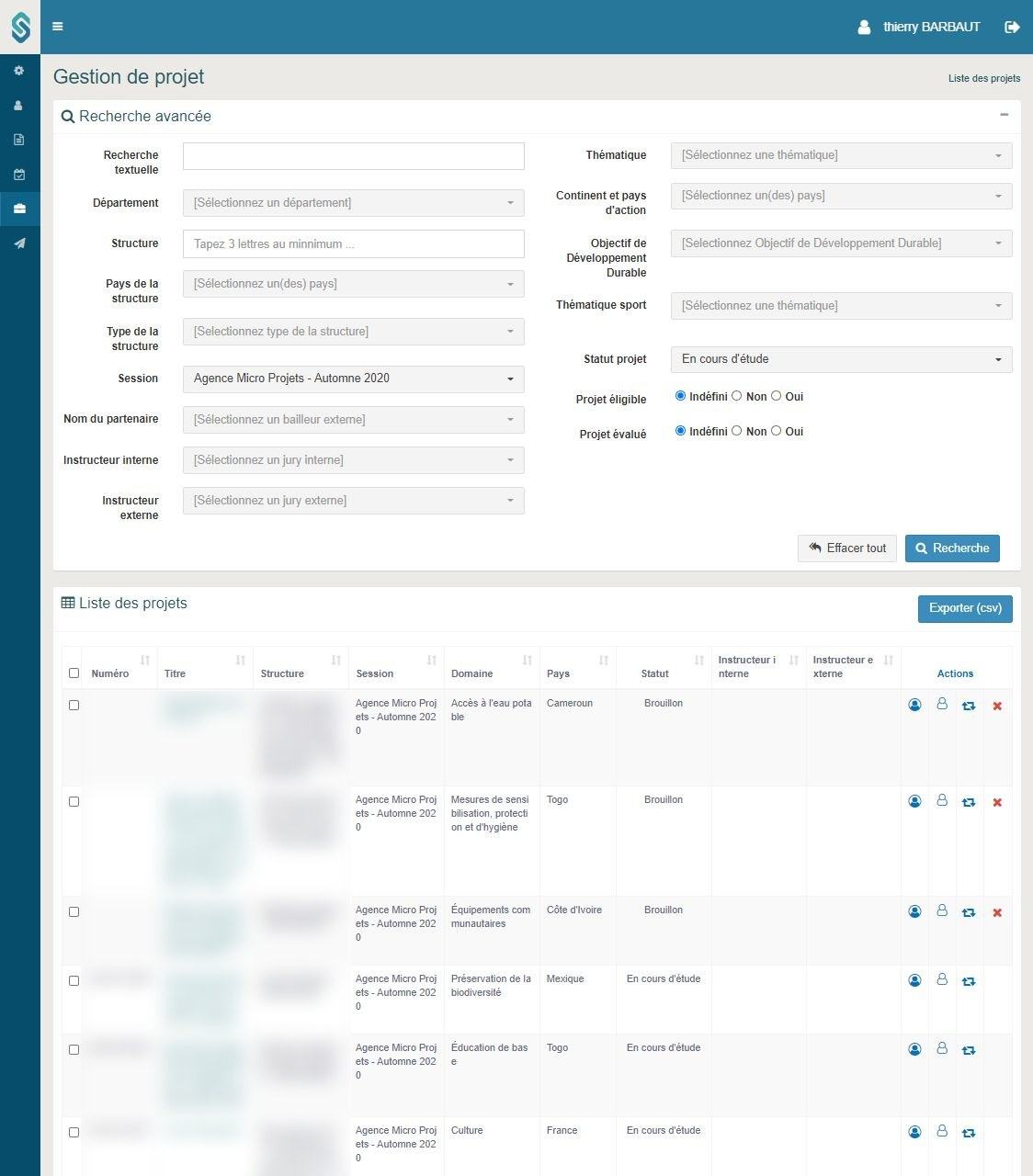
The project management area: search by theme, country, Sustainable Development Goal, reviewer and status, then follow-up of each application.Screenshot: Portail Solidaire, La Guilde Open and run the calls for proposals
Open the five funders' calls for proposals and run them, from launch to decisions.
Support applicants
Help with submitting applications, user training with the team, methodological guides, good-practice sheets, and a documentary series, Acteurs du Développement, to showcase the projects.
Review with a panel of experts
140 international experts, by theme (water, health, education, energy, digital, entrepreneurship, environmental protection, culture, sustainable cities…) and by country or region.
Follow the funding of the winning projects
From payments to reports.
Evaluate in the field
On-site evaluation of the funded projects (see the Field experience page).
Grow the programme
The scheme was taken up as a white label by a foundation and a partner, and replicated for AFD with the Sport & Development programme.
What I take from it
“A platform only thrives if someone runs the programme around it: the calls, the applicants, the experts and the field.”
« Il a créé [l'écosystème numérique] de La Guilde, lui octroyant à cette occasion un avantage concurrentiel clef, en même temps qu'un outil innovant et productif. »
Contact
A position, an assignment? Let's talk.
Open to a position or an assignment.
Paris · assignments in France and abroad.